Schema markup for e-commerce: How to dominate product searches
Product, Offer, AggregateRating and Review — learn to implement the schema types that give your webshop stars, prices and availability directly in Google's search results.
For e-commerce businesses, schema markup isn't just "nice to have" — it's a direct revenue driver. Correctly implemented structured data can increase your click-through rate by up to 35% and give your products star ratings, prices and availability directly in Google's rich results.
Webshops with correct Product schema see on average 35% higher CTR and 25% lower bounce rate compared to product pages without structured data — and product data is increasingly read directly by AI shopping assistants.
Essential schema types for e-commerce
Product
The core type for any product. Defines name, description, image, brand and SKU. Without Product schema, Google has no structured understanding of your products.
Offer
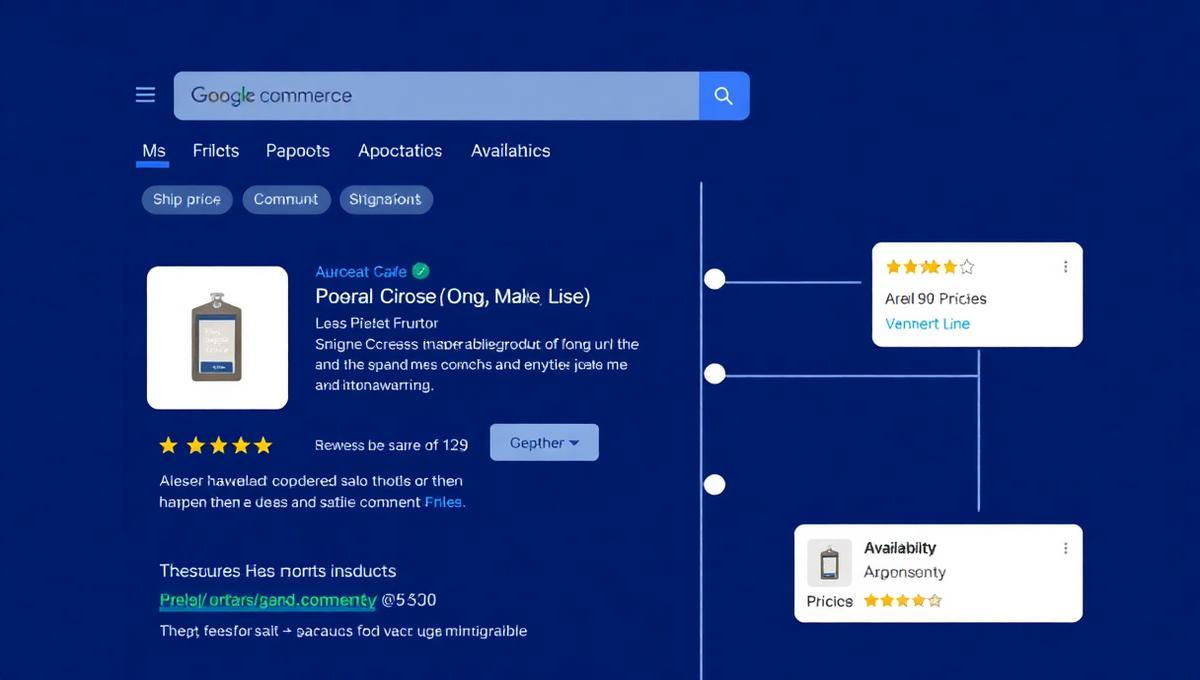
Nested within Product. Defines price, currency, availability (InStock/OutOfStock) and price validity period. Critical for showing prices in search results.
AggregateRating
Aggregates customer ratings into an average score (e.g. 4.5 out of 5 based on 127 reviews). Triggers the coveted stars in search results.
Review
Individual customer reviews with author, date and rating. Strengthens credibility and gives Google detailed feedback on product quality.
How the types connect
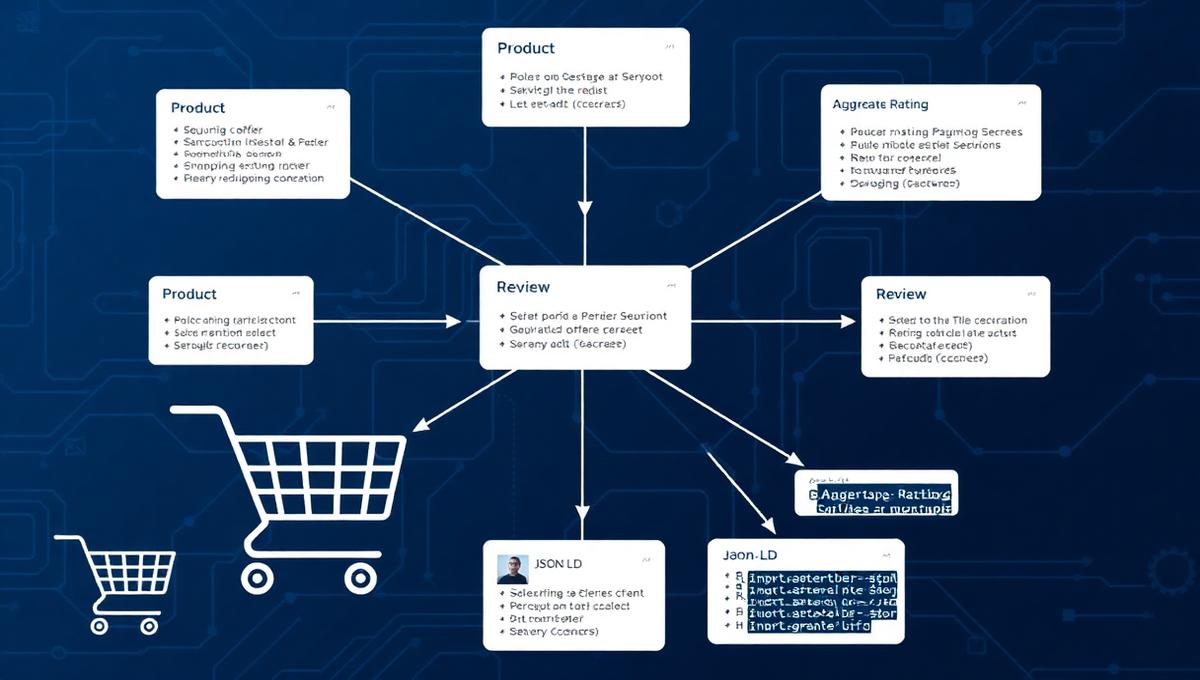
E-commerce schema works as a nested structure where Product is the parent type and the other types are nested within. A typical product page should have this hierarchical structure:
Product→ defines the product itself with name, description, image andbrandProduct.offers→ one or moreOfferobjects with price, currency and availabilityProduct.aggregateRating→ aggregate rating from all reviewsProduct.review→ individual reviews with author and date
This structure ensures Google can display Rich Results with all the elements that drive clicks and conversions. Without correct nesting, your data risks being ignored.
Critical fields you must not forget
- brand.name — Google uses brand for entity identification. Without it, your products can't be linked to your business.
- offers.availability — Use schema.org values like
InStock,OutOfStock,PreOrder. Google shows availability in results. - offers.priceCurrency — Always in ISO 4217 format (DKK, EUR, USD). Errors here prevent price display.
- image — At least one high-resolution product image. Google prefers 1200×1200 pixels.
- sku / gtin — Unique product identifiers strengthen knowledge graph integration.
E-commerce schema and AI search
With Google AI Overviews and AI-powered shopping, structured data is critical for whether your products appear in AI-generated recommendations. AI systems use Product schema to:
- Compare products across webshops based on structured prices and ratings
- Generate product recommendations in AI-powered shopping results
- Verify product availability and price history
- Identify and match products with specific user queries
Implementation: Step by step
- 1Map your product data: Do you have access to prices, availability, ratings and images in structured form?
- 2Choose the relevant schema types in our schema.org documentation
- 3Implement JSON-LD markup on all product pages with all required fields
- 4Test and validate your markup — one error can prevent all Rich Results
- 5Monitor performance and optimize continuously with automated quality assurance
Ready to boost your webshop?
AI Schema Generator automatically generates Product, Offer and AggregateRating markup for your product pages — with full validation and quality assurance.