Structured Data for AI Agents: How LLMs Use Schema.org
In a world where AI agents increasingly browse, analyze and cite web content, schema.org markup is no longer just for Google — it's for the entire machine-readable web.

ChatGPT, Gemini, Perplexity and a growing army of AI agents crawl millions of web pages daily. These systems don't just use visible text — they look for structured data to understand context, verify facts and cite sources. Schema markup has become the universal language for machine communication.
AI agents prioritize sources with structured data because it reduces hallucination risk. Machine-readable content is the key to being cited in AI-generated answers.
How AI agents use schema.org
- Entity recognition — LLMs use Organization, Person and Product schema to identify what a page is about and who is behind it.
- Fact extraction — Structured fields like price, date, address and rating can be extracted directly without risk of misinterpretation.
- Source verification — Entity governance with sameAs links enables the AI to verify that the source is legitimate.
- Context enrichment — Schema markup gives the AI context that plain text cannot deliver: relationships between entities, timestamps, categorizations.
RAG pipelines and structured data
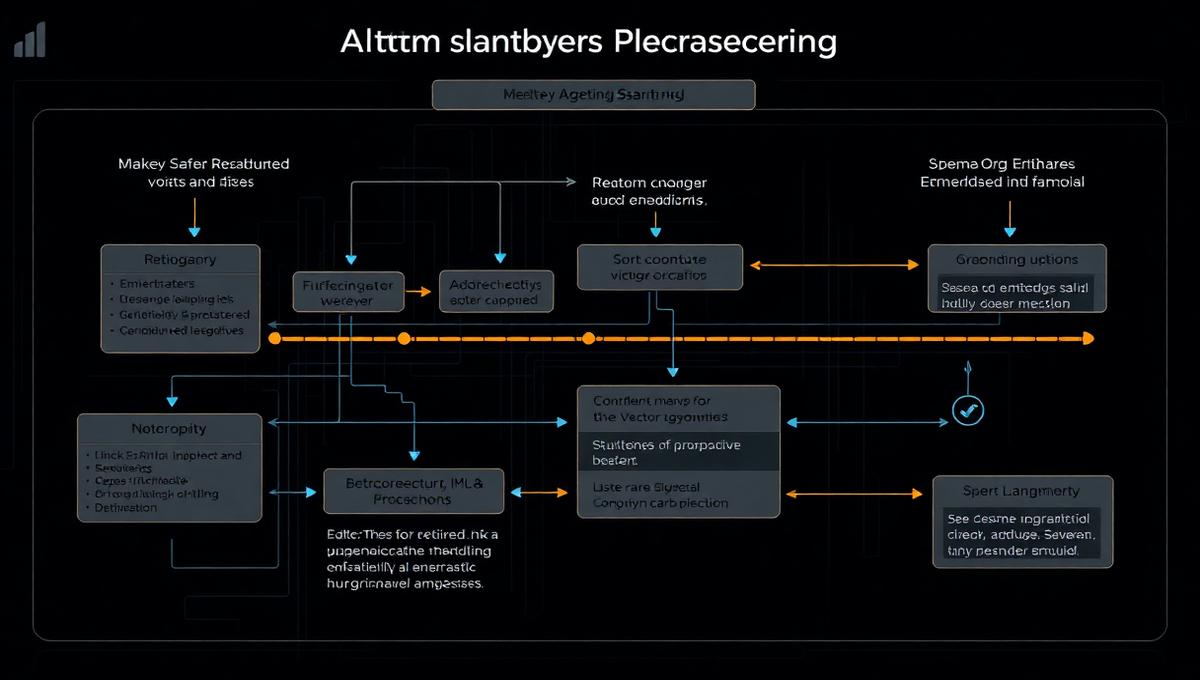
Most modern AI systems use RAG (Retrieval-Augmented Generation) — an architecture where the AI first retrieves relevant documents and then generates an answer based on them. Schema markup affects both steps:
- Retrieval — Structured data makes it easier for the AI to find relevant content because entities and relationships are explicit.
- Generation — When the AI generates its answer, it can pull facts directly from structured fields with higher precision.
- Grounding — Schema markup reduces hallucination by giving the AI verifiable data points to build the answer on.
Future-proofing with schema markup
1 Implement broad schema coverage
The more structured data, the easier AI agents can parse your content. Cover all pages with relevant schema types.
2 Strengthen entity identity
Use sameAs links and consistent entity governance so AI systems can verify your identity.
3 Optimize for machine readability
Use JSON-LD — it's the syntax AI agents can parse best.
4 Keep data current
AI agents prioritize fresh information. Automate validation and monitoring.
Implications for your strategy
The shift from traditional search to AI-powered discovery means schema markup is no longer an SEO tactic — it's a digital infrastructure investment.
- Websites without schema markup are gradually becoming invisible to AI agents
- E-commerce sites with Product schema get AI-powered product recommendations
- Local businesses with LocalBusiness schema appear in AI-based local recommendations
- AI Overviews and similar products will only expand in coming years
Future-proof your website
AI Schema Generator builds the structured data infrastructure that ensures your website is visible to next-generation AI systems.