Knowledge Graphs: What are they, and why are they crucial for your visibility?
A complete guide to knowledge graphs — how they work, why Google and AI systems depend on them, and how schema markup gives you control over your business's digital identity.
When you search on Google and see an information box on the right side with facts about a person, company or place — you're seeing a knowledge graph in action. But knowledge graphs are far more than the visible result. They are the underlying structure that search engines and AI systems use to understand the world.
A knowledge graph isn't about what is written on a page — but about what things are, and how they relate to each other.
What is a knowledge graph?
A knowledge graph is a structured database that organises information as entities (things) and relations (connections between things). Instead of storing data in rows and columns, a knowledge graph represents the world as a network of connected units.
Think of it as a digital brain: It knows that "Copenhagen" is a city located in Denmark, which is a country in Europe. It also knows that Copenhagen has a mayor, a postcode and is home to specific organisations.
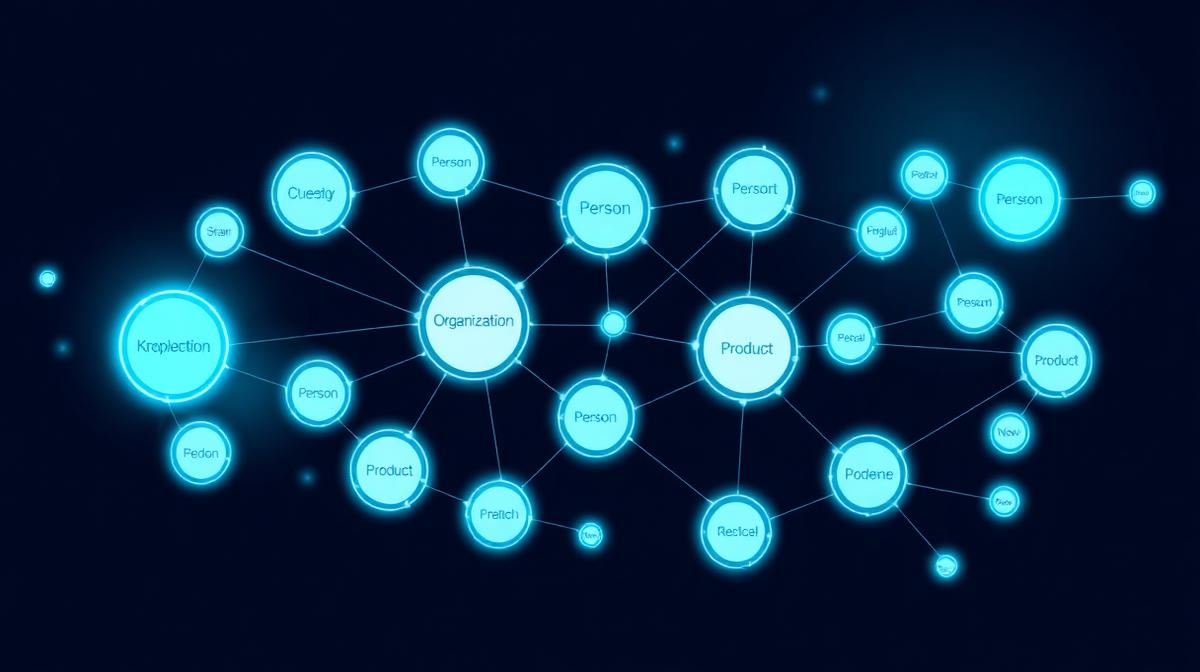
Google's Knowledge Graph contains over 500 billion facts about 5 billion entities — and it's constantly growing.
Why are knowledge graphs crucial for search engines?
Search engines have moved from matching keywords to understanding meaning. Knowledge graphs are the foundation for this transformation.
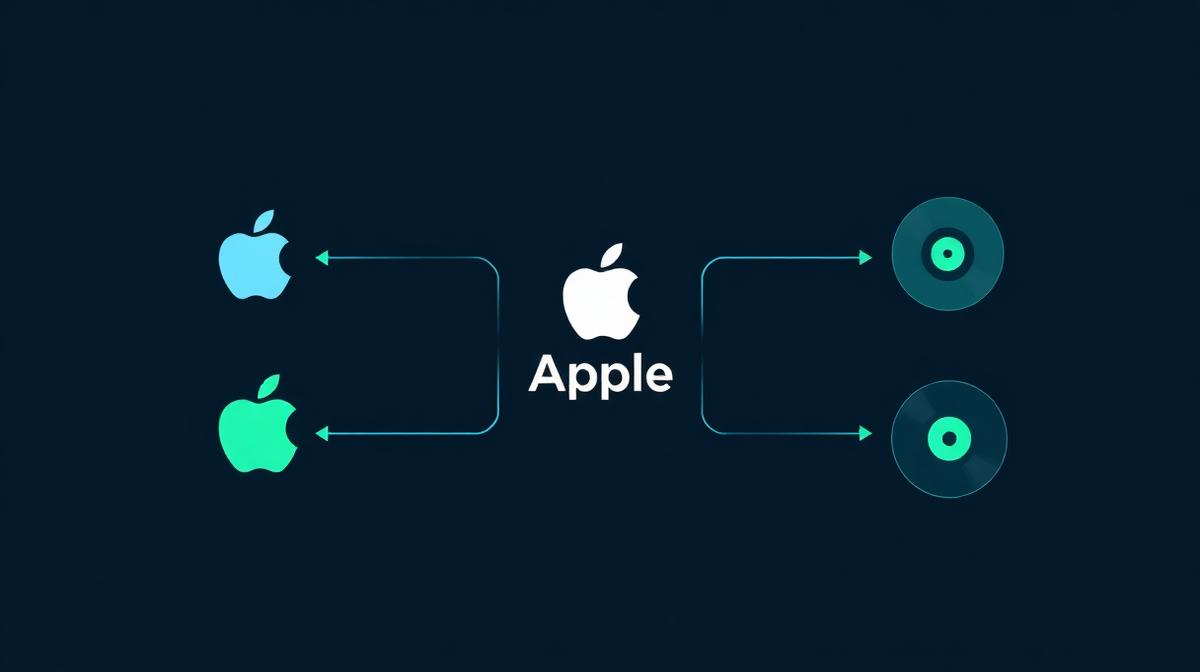
- Entity disambiguation — When you search for "Apple", Google knows whether you mean the technology company, the fruit or the record label, based on context and knowledge graph relationships.
- Zero-click answers — Knowledge panels, featured snippets and AI Overviews pull directly from knowledge graphs to deliver instant answers.
- Improved ranking — Pages correctly linked to entities in Google's Knowledge Graph have a documented advantage in search results.
- AI-generated answers — ChatGPT, Gemini and Perplexity use knowledge graphs as a trusted source to verify and structure answers.
Google's Knowledge Graph vs. your own
Google's Knowledge Graph is the most well-known, but the concept is universal. Any organisation can build its own knowledge graph — and they already do, often without realising it.
When you implement schema markup on your website, you actively contribute to building and defining your business's place in the global knowledge graph. You tell search engines and AI systems:
- What your business is — Organization, LocalBusiness, Corporation
- What you offer — Product, Service, SoftwareApplication
- Who is behind it — Person, Author, Employee
- Where you are — PostalAddress, GeoCoordinates, AreaServed
- What customers think — Review, AggregateRating
Entities and relations — the core of knowledge graphs
What makes knowledge graphs powerful is the relationships. An entity alone — e.g. your business — is just a data point. But when connected to location, employees, products, reviews and industry categories, a rich and credible picture emerges.
Schema markup defines these relationships explicitly. Instead of leaving it to Google to guess, you declare: "This organisation has this address, this CEO, these products and these reviews."
That's the difference between hoping for visibility and controlling it.
Knowledge graphs and the AI era
With the emergence of LLM-based search systems like Google AI Overviews, ChatGPT Search and Perplexity, knowledge graphs have become even more important. These systems need structured, verifiable information to generate correct answers.
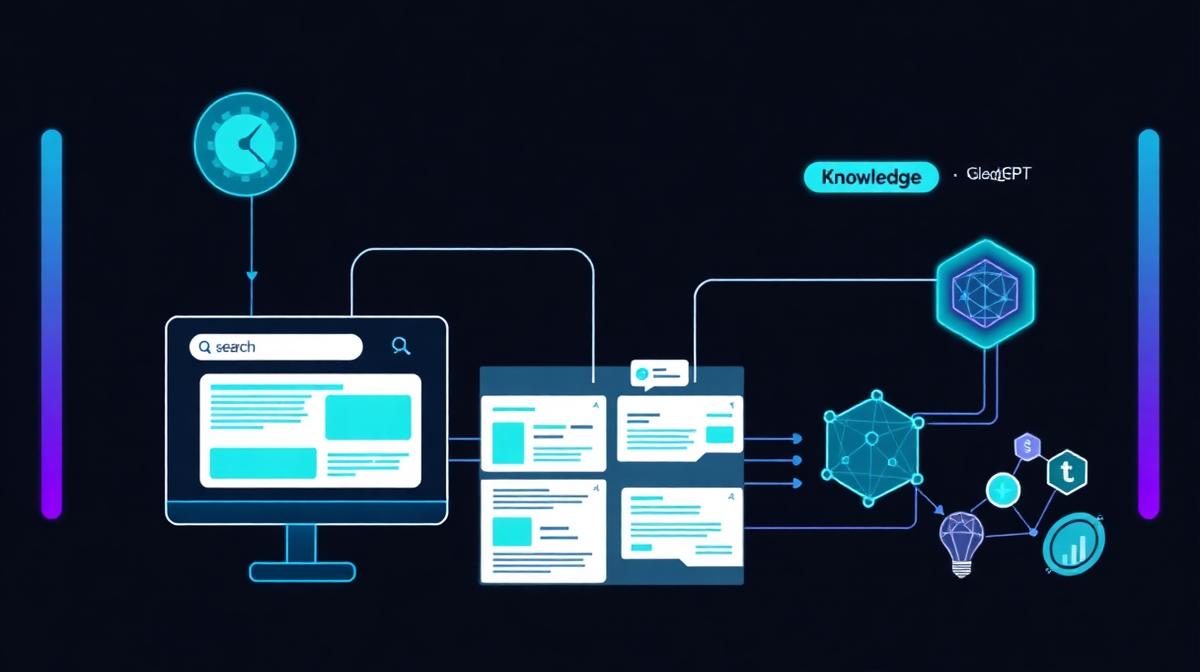
When an AI model needs to answer "Who is the best provider of X in Copenhagen?", it draws on knowledge graph data. Businesses with well-defined schema markup have significantly higher probability of being included in the answer.
RAG systems (Retrieval-Augmented Generation) — which power most modern AI search engines — use knowledge graphs as a quality filter. Structured data functions as a guarantee of information reliability.
Entity Control and Entity Governance
Two concepts have become central to working with knowledge graphs:

- Entity Control — The ability to define and manage how your business and its products are represented in search engines and AI systems. It's about ensuring the right entities are correctly defined with precise relationships.
- Entity Governance — The ongoing process of maintaining, updating and quality-assuring your structured data. Like governance in data management, it's about consistency, accuracy and scalability.
Without entity control, you risk Google building an incorrect picture of your business. Without entity governance, you risk that picture slowly deteriorating over time.
AI Schema Generator is built specifically to deliver both. Our solution differs from traditional methods by automating the entire process — from analysis to publication — with full control over entities and relationships.
How to build your knowledge graph with schema markup
Implementing schema markup is the most direct path to building and controlling your knowledge graph. Here are the key steps:
Identify your core entities
Start with your business (Organization), your products/services and your key people.
Define the relationships
Connect the entities: The organisation has employees, offers services, has locations and receives reviews.
Implement schema markup
Use JSON-LD to declare entities and relationships across your entire website.
Ensure consistency
Make sure the same entities are referenced consistently across all pages — this is where most fail.
Maintain and update
Knowledge graphs are living systems. Automate updates so your data is always current.
Future-proofing through structured data
Knowledge graphs are not a trend — they are the fundamental layer that the future internet is built on. Search engines, AI assistants, voice search and IoT devices all depend on structured data to function correctly.
Businesses that invest in their knowledge graph today are building a competitive advantage that will only grow. It's not just about SEO — it's about ensuring your business is understood correctly by all digital systems.
With AI Schema Generator, you can automate the construction of your knowledge graph with 800+ schema types, full quality assurance and automatic publication to your website.
Ready to build your knowledge graph?
AI Schema Generator analyses your website and automatically builds a consistent knowledge graph with schema markup — ready for Google, AI Overviews and the search systems of the future.